

Crossroads Ford Wake Forest

Blog / Wake Forest Ford Dealer

Buying From A Dealership vs. Private Seller: The Differences

Confidence In Your Car Purchase

Buying your next vehicle should feel exciting, not uncertain. At Crossroads Ford of Wake Forest, we believe the process should be straightforward, transparent, and supported by professionals who help you make a confident decision. When comparing buying from a dealership vs. a private seller, the conversation goes far beyond the sticker price. It’s about the value of expert guidance, verified vehicle disclosure, financing options, and help with paperwork that can otherwise become overwhelming.

One of the biggest advantages of working with a dealership is time savings. Instead of coordinating inspections, researching vehicle history, arranging financing, and handling registration on your own, our dealership offers a one-stop shop to simplify the process. Our team can assist with loan pre-approval, provide clear vehicle disclosure and history information, and walk you through every step from test drive to title transfer.

While private sellers may advertise a lower asking price, those purchases often require buyers to manage inspections, paperwork, and financing independently—with little recourse if issues arise later. Buying from our dealership means partnering with a business built on reputation, transparency, and ongoing customer support. From carefully selected inventory to assistance with financing and documentation, our goal is to make purchasing your next vehicle simpler, safer, and far more convenient, so you can focus on enjoying the drive rather than navigating the details.

Weigh the pros and cons of buying from a dealer vs. a private seller, and head to Crossroads Ford of Wake Forest to browse our inventory today.

Who This Guide Is For

This guide is for buyers who want a simpler purchase process and more peace of mind. It is also for budget-focused shoppers who are willing to handle a vehicle inspection, title transfer, negotiation, and DMV steps on their own.

Dealership vs. Private Seller at a Glance

Buying from our dealership offers a clearer, more supported process with a larger selection of vehicles in one place. While private sellers may advertise lower sticker prices, the lowest price does not always mean the lowest total ownership cost once repairs, taxes, registration, and financing are considered.

At our dealership, you benefit from available financing options, professionally prepared vehicles, access to vehicle history reports, and assistance with paperwork, including title transfers and registrations. Many vehicles may also include limited warranty coverage or Ford Blue Advantage benefits for added peace of mind.

Private sales typically involve lower upfront prices but are often sold as-is, require buyers to handle paperwork themselves, and rarely offer financing, trade-ins, or post-sale support. For many shoppers, the convenience, transparency, and protection of buying from our dealership make it a more reliable choice.

Price, Fees, and Total Cost

Private sellers often start lower because they do not carry dealership overhead, staffing, compliance costs, or a reconditioning center. That lower purchase price can be attractive, especially if you are paying cash and understand local market value. Dealership pricing can include dealer fees, a documentation fee, optional products, and financing markup tied to the interest rate. Still, some dealer vehicles have undergone reconditioning, basic service, or inspections, which may reduce the risk of mechanical problems after the sale.

Why Dealer Prices Are Usually Higher

A car dealer has operating costs that a private owner does not. Those costs can include staffing, lot expenses, regulatory compliance, advertising, title processing, and warranty-related obligations. Ford Blue Advantage vehicles usually cost more because they include stricter inspections and some level of warranty coverage. That premium can be worth it for buyers who want stronger reliability and fewer unknowns.

Why Private Sellers Can Be Cheaper

A private seller is usually focused on a quick sale rather than margin targets. That often creates room for negotiation, especially if the seller has already bought another vehicle. A low price can also be a warning sign. Hidden mechanical issues, accident history, deferred maintenance, or title problems can erase your savings fast.

Risk, Inspections, and Vehicle Condition

At our dealership, we inspect and recondition vehicles before offering them for sale, but standards vary by store and by vehicle. You should still ask what was checked, what was repaired, and whether service records or a vehicle history report are available. Private sales often place more buyer risk on you because many are sold as-is. In either case, a pre-purchase inspection by an independent mechanic is one of the smartest steps you can take before money changes hands.

What Buyers Usually Get From a Dealership

When you purchase a vehicle from our dealership, you gain access to important information that helps you buy with confidence. Our team works to provide available service records, maintenance history, and details about any reconditioning or preparation completed before the vehicle reaches our lot.

As a licensed dealership with an established reputation, we are committed to transparency and accountability throughout the buying process. Our business identity and professional standards help ensure that disclosures are clear and accurate, giving you greater peace of mind as you make your decision.

Many vehicles at our dealership may also qualify for the Ford Blue Advantage program. These vehicles meet specific inspection standards and can include limited warranty coverage, offering additional confidence long after you leave the lot.

What Buyers Must Verify in a Private Sale

With an individual seller, you need to confirm that the VIN on the car matches the one on the title and other documents. You should also verify clean title status, ask about any lien release, review maintenance history, and check local emissions or inspection requirements. Never skip a test drive or a pre-purchase inspection. An independent mechanic can spot hidden mechanical issues that a casual buyer may miss.

Financing, Trade-Ins, and Payment Flexibility

Our dealership offers financing, lender access, and trade-in options that private sellers do not. For many buyers, the ability to spread the cost into a monthly payment is the main reason a dealer price makes sense. Private sellers often prefer a cashier's check or cash. That can work well if you already have funds available, but it limits flexibility for shoppers who need financing or want to roll a current vehicle into the deal.

When Dealer Financing Helps

Our dealer financing helps buyers compare loan options in one place and match terms to their budget. It can also simplify the process by combining purchase, financing, trade-in, and registration into a single transaction. This convenience matters if you are balancing down payment size, financing costs, and interest rate. It can also save time if you need transportation quickly. Speak with our finance experts today!

When Cash Buying Works Better

Paying cash can give buyers flexibility and a clear spending limit, but that does not mean a private sale is the best route. Many cash buyers actually prefer working with a dealership because the process is more transparent, secure, and professionally managed.

At our dealership, you can still negotiate while benefiting from a clearly documented vehicle history, verified titles, and vehicles that have already been inspected. This helps eliminate much of the uncertainty that often comes with private party purchases. In addition, our team handles the paperwork, registration guidance, and transaction details, which saves time and reduces risk. If you plan to pay cash, it is still important to set a firm budget that includes sales tax, registration, insurance, and any potential maintenance. The advantage of buying from our dealership is that you can review those costs upfront with a knowledgeable team while choosing from a range of quality vehicles in one convenient location.

For cash buyers who want a straightforward purchase with fewer surprises, our dealership offers the confidence and convenience that private sales often lack.

Paperwork, Registration, and Legal Protection

Crossroads Ford of Wake Forest handles the title transfer, temporary tags, registration paperwork, and required sales documents. That reduces errors and makes the transaction easier for buyers who are unfamiliar with DMV rules. Private sales require the buyer to verify every document and complete state-specific steps correctly. Mistakes with paperwork can delay registration, create tax issues, or leave you with a car you cannot legally drive.

Dealer Process and Accountability

Our licensed dealer operates in accordance with state regulations and disclosure requirements. This creates better consumer protection, stronger accountability, and a clearer path for legal recourse if something goes wrong. This is one reason many buyers prefer a dealership. The process is more structured, and there is usually someone available to answer follow-up questions.

Warranties, Returns, and Peace of Mind

Our dealership offers additional protection, including warranties, Ford Blue Advantage coverage, and optional service contracts. Private sellers rarely provide any post-sale protection, and most deals are final once payment is made. That does not mean every dealer car is protected. Some are sold as-is, too, so you need to read every disclosure and understand exactly what is and is not covered.

What Warranty Coverage Really Means

Manufacturer warranty coverage usually follows the vehicle if time or mileage remains. Ford Blue Advantage coverage is different from a dealer warranty, and an extended service contract is different from both. Review the term length, covered components, deductibles, and exclusions before signing. A short limited warranty can still be useful, but only if you know its limits.

When a Dealership Is the Better Choice

Buying from a dealership is often the smarter option for drivers who want a smoother, more supported experience from start to finish. Our dealership makes the process easier by keeping everything in one place, including financing options, a wide range of inventory to compare, and the ability to apply your trade-in toward your purchase. It’s also an ideal choice for shoppers who value peace of mind. With built-in buyer protections, professional guidance throughout the process, and support even after you drive off the lot, purchasing through our dealership provides confidence and convenience that private sales simply can’t match. For buyers who want a streamlined process, trusted service, and a team ready to help every step of the way, choosing our dealership is the clear advantage.

Best-Fit Buyer Profiles

A dealership often makes sense for:

  • First-time used-car buyers
  • Families focused on reliability
  • Buyers who need a monthly payment
  • Shoppers interested in Ford Blue Advantage vehicles
  • People who want help with paperwork, title transfer, and registration

When a Private Seller Is the Better Choice

A private seller can be the better choice if your top priority is price and you are comfortable doing your own due diligence. This route works best when the seller has solid service records, the vehicle passes inspection, and the title is clean.

It can also be a good fit for cash buyers who know the market value and can act quickly. The savings can be real, but only if you avoid hidden damage, title issues, and poorly documented maintenance.

That said, many buyers ultimately find that purchasing from our dealership is the better option when they want more certainty and support throughout the process. With professionally inspected vehicles, transparent paperwork, available financing, and the ability to trade in your current vehicle, buying from our dealership removes much of the risk and guesswork that can come with private sales—while still helping you find a great value!

Best-Fit Buyer Profiles

A private sale often fits:

  • Mechanically savvy shoppers
  • Bargain hunters
  • Buyers are comfortable with as-is sale terms
  • People who can verify title status and paperwork themselves
  • Buyers who can absorb some post-purchase risk

If you go this route, be disciplined. Meet in a safe place, verify the VIN, review the vehicle history, and never skip the inspection.

Final Verdict: Which Option Makes More Sense

For most buyers, a dealership wins on convenience, access to financing, legal structure, and peace of mind. A private seller can still be the smarter move on upfront price, but only when your inspection, title, and vehicle history checks are solid.

The right choice comes down to risk tolerance, total ownership cost, and the level of support you want before and after the sale. If you want a smoother process with greater accountability, buying from our dealership is the better option, while a private seller makes more sense for experienced buyers who can manage the extra risk.

Decision Framework

If you’re looking for a smoother experience with fewer risks, a dealership is the better path. Buying through our dealership means less hassle, stronger buyer protections, available financing options, and a team that handles the paperwork and details for you.

A private seller may make sense if the lower upfront price is your main priority—but only when the vehicle has a clean title, verified service history, and passes a thorough independent inspection.

For most shoppers, the added confidence, support, and convenience of working with a trusted dealership make all the difference. Explore our inventory at Crossroads Ford of Wake Forest or connect with our team today to find the right vehicle with the peace of mind you deserve.

FAQs

Is it better to buy from a dealership or a private seller?

It depends on your priorities. Dealerships are usually better for financing, paperwork, selection, and buyer protections, while private sellers may offer a lower upfront price.

What is the 20/3/8 rule for buying a car?

The 20/3/8 rule suggests putting 20% down, financing for no more than 3 years, and keeping total car costs under 8% of gross monthly income. It is a budgeting guide, not a legal rule.

What is the disadvantage of buying from a private seller?

The biggest drawback is risk. A private sale is often an as-is sale with no warranty, limited legal recourse, and more responsibility for inspection and paperwork.

What is a red flag in a dealership?

Watch for unclear dealer fees, pressure to skip a vehicle inspection, vague vehicle history, rushed paperwork, or financing terms that are not fully explained. A reputable used car dealer should answer questions clearly and in writing. At Crossroads Ford of Wake Forest, our main priority is transparency, so feel free to reach out to our team if you have any questions regarding your next vehicle purchase!
SHOP NOW

Posted in:

Related Posts

Ford Escape vs. Toyota RAV4: Which Compact SUV Should You Buy?

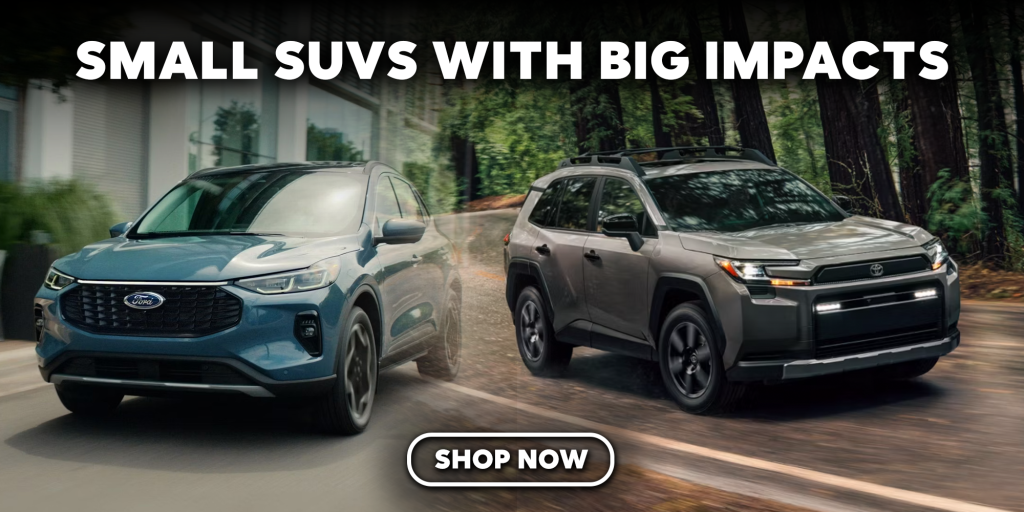
Everyday Versatility, Elevated: Choosing Your Ideal Compact SUV Between Ford & Toyota Compact SUVs continue to define modern driving, offering the flexibility families need and the efficiency commuters appreciate. In the conversation surrounding Ford Escape vs. Toyota RAV4, drivers are often searching for the right balance of performance, technology, and everyday adaptability. Both models bring strong reputations to the table, but the Ford Escape stands out with its broad range of powertrain choices and refined, contemporary styling that feels tailored for a wide spectrum of lifestyles. The Ford Escape is engineered for drivers who want options, from efficient hybrid driving to traditional gasoline performance, all wrapped in a modern design with sharp lines and bold LED lighting. Meanwhile, the Toyota RAV4 leans into adventurous capability with a chiseled silhouette and rugged cues designed to inspire confidence on light trails and urban streets alike. Whether you’re loading up for a weekend road trip, navigating your daily commute, or balancing family life with outdoor hobbies, this Ford Escape vs. Toyota RAV4 comparison highlights two compelling approaches to the compact SUV formula. If you’re ready to experience the difference firsthand, we invite you to visit Crossroads Ford of Wake Forest and explore the Ford Escape in person with a test drive that brings its versatility to life. Confidence in Every Drive When evaluating Ford Escape vs. Toyota RAV4 specs, powertrain flexibility becomes a key differentiator. The Ford Escape offers a 1.5L EcoBoost® I-3 gasoline engine, along with hybrid and plug-in hybrid variants. The available 2.0L EcoBoost® upgrades horsepower capacity to 250, and also grants you a maximum towing capacity of 3,500 lbs. These engine options allow drivers to select the balance of performance and efficiency that best suits their routine. The hybrid and plug-in hybrid models deliver strong fuel efficiency up to 42 MPG in city driving conditions while maintaining responsive acceleration, while the gasoline option is tuned for balanced, everyday usability. The Toyota RAV4 lineup centers around a 2.5L Dynamic Force four-cylinder engine paired with either a hybrid or plug-in hybrid system. This allows for an EPA-estimated fuel economy of 47 MPG in the city* and a combined net horsepower of 236. An electronically controlled continuously variable transmission (eCVT) manages power delivery, and available All-Wheel Drive enhances traction in changing conditions. While the Toyota RAV4 offers a unified engine platform across its electrified models and has a higher MPG for daily driving, the Ford Escape’s broader powertrain selection gives drivers more freedom to personalize their driving experience—an important advantage in the Ford Escape vs. Toyota RAV4 discussion. Drive modes further shape the experience. The Ford Escape vs. Toyota RAV4 share multiple drive modes that adjust handling and throttle response, helping drivers confidently transition from city traffic to winding roads. These include Sport, Eco, and Normal modes. The Toyota RAV4 includes an additional trim-specific, EV-focused setting on select models, but the Ford Escape offers Slippery Mode, which helps you maintain vehicle control in snow or rain. Cabin Amenities Inside the cabin, the Ford Escape vs. Toyota RAV4 conversation shifts toward comfort and connectivity. The Ford Escape offers flexible seating and maximum cargo space of up to 65.4 cu.ft., allowing drivers to easily adapt the interior for passengers or gear. This versatility is a defining trait, supporting everything from grocery runs to outdoor equipment hauling with minimal compromise. The Toyota RAV4 provides generous front and rear legroom and offers up to 70.4 cu.ft. of available cargo space when the rear seats are folded flat. When discussing Ford Escape vs. Toyota RAV4 size, both SUVs clearly prioritize usable interior room. Although the Toyota RAV4 offers more cargo space compared to the Ford Escape, the Ford Escape’s flexible seating and smart interior configurations make it exceptionally easy to adapt the space for passengers and gear in everyday driving situations. Technology plays a central role in the Ford Escape vs. Toyota RAV4 comparison. Along with wireless Apple CarPlay® and Android Auto™ compatibility, smartphone integration on both models is streamlined. The Ford Escape features an available 13.2-in. touchscreen, while the Toyota RAV4 upgrades only to a 12.9-in. screen. This allows for even more convenient access and visibility for all of your connectivity and entertainment needs. Safety is another critical factor in the Toyota RAV4 vs. Ford Escape reliability and driver confidence discussions. The Toyota RAV4 comes standard with Toyota Safety Sense™ 4.0, while the Ford Escape utilizes Ford Co-Pilot360®. These suites are designed to enhance confidence across a wide range of driving scenarios. However, the Ford Escape takes safety a step further in its suite, with features like Blind Spot Information System (BLIS®) with Cross-Traffic Alert and available Reverse Brake Assist, providing enhanced awareness in lane changes and parking situations beyond the core forward-collision and lane-assist technologies of the Toyota RAV4. The Compact Choice for Modern Drivers In the final analysis of Ford Escape vs. Toyota RAV4, both compact SUVs present compelling options built around versatility and efficiency. The Toyota RAV4 emphasizes rugged styling and a clearly defined hybrid system anchored by a 2.5L engine. It offers a spacious cabin and an impressive list of technology upgrades across trims. However, the Ford Escape distinguishes itself through its broader powertrain lineup, including two EcoBoost® gasoline engines, hybrid, and plug-in hybrid options, along with refined chassis tuning and a modern, athletic exterior design. Its flexible interior configurations, wireless smartphone integration, and advanced driver-assist technologies create a well-rounded experience tailored to a wide variety of drivers.For those carefully weighing Ford Escape vs. Toyota RAV4, the Ford Escape delivers adaptability without overcomplication, efficiency without sacrificing responsiveness, and technology designed for intuitive use. Ultimately, in the competitive landscape of compact SUVs, the Ford Escape emerges as a smart, versatile choice ready to meet the demands of daily life and weekend adventure alike. We invite you to continue your Ford Escape vs. Toyota RAV4 research in person at Crossroads Ford of Wake Forest. Schedule a test drive today and discover how the Ford Escape can elevate your everyday drive with confidence, flexibility, and modern capability. SHOP NOW *EPA Fuel Economy Estimates. Actual mileage may vary with driving conditions—use for comparison only.

Ford Bronco vs. Toyota 4Runner: Specs, Reliability, and Which SUV Wins

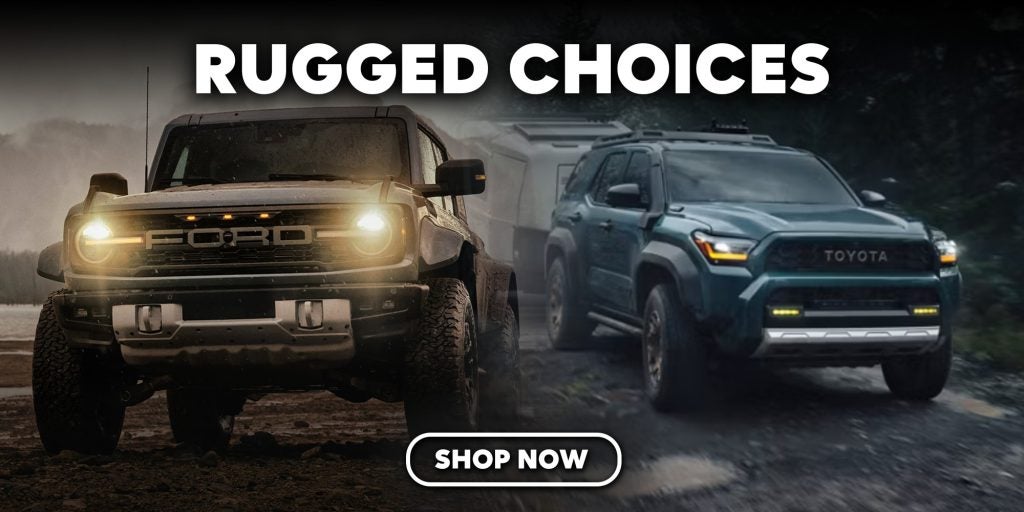
Trail-Ready Confidence: Choosing Between Two Icons Of Adventure When your weekends are filled with mountain switchbacks, desert trails, or simply the daily drive that deserves something more exciting, two names consistently rise to the top: the Ford Bronco and the Toyota 4Runner. Both SUVs are engineered for drivers who crave capability and authenticity, blending rugged strength with modern refinement. Yet in this detailed Ford Bronco vs. Toyota 4Runner evaluation, one model consistently pushes the envelope further. Whether you’re loading up camping gear for a spontaneous getaway or navigating unpredictable terrain, this Ford Bronco vs. Toyota 4Runner comparison reveals how these SUVs can align with your lifestyle. If you’re ready to experience the difference firsthand, we invite you to visit Crossroads Ford of Wake Forest for a test drive and explore which adventure-ready SUV truly fits your ambitions. Power Meets Purpose: Performance, Capability, & Trail Dominance Performance is often the deciding factor in any serious Ford Bronco vs. Toyota 4Runner matchup. The Ford Bronco offers a trio of engine options, starting with a standard 2.3L EcoBoost® engine and expanding to an available 2.7L EcoBoost® V6 and an available 3.0L EcoBoost® V6. At its peak, the Ford Bronco delivers up to 418 horsepower and 440 lb.-ft. of torque—numbers that firmly establish it as a commanding presence both on pavement and off the beaten path. By contrast, the Toyota 4Runner comes equipped with a standard 2.4L turbocharged i-FORCE engine producing 278 horsepower and 317 lb.-ft. of torque. An available i-FORCE MAX hybrid powertrain increases output to 326 horsepower and 465 lb.-ft. of torque. While the hybrid torque figure is impressive, the Ford Bronco’s available 418 horsepower ensures exhilarating acceleration and responsive performance that adventure enthusiasts will appreciate. Towing capacity is another focal point in this Ford Bronco vs. Toyota 4Runner discussion. The Toyota 4Runner can tow up to 6,000 lbs. when properly equipped, compared to the Ford Bronco’s standard 3,500-lb. capacity and up to 4,500 lbs. with the Ford Bronco Raptor®. Although the Toyota 4Runner posts a higher maximum towing figure, the Ford Bronco counters with performance-driven engineering and specialized trims like the Ford Bronco Raptor®, designed for high-speed desert running and advanced off-road capability—delivering a unique kind of muscle tailored to serious exploration. Speaking of off-road technology, take a look at these features that further distinguish the Ford Bronco vs. Toyota 4Runner. Every Ford Bronco trim includes the High-Performance Off-Road Stability Suspension (HOSS) System and Terrain Management System™, providing adaptable control across varying landscapes. Available features such as steel bash plate protection, Electric Front and Rear-Locking Differentials, and a front stabilizer bar disconnect elevate its trail-readiness. The Sasquatch® Package on select trims enhances ground clearance with high-clearance fender flares, lifted suspension, rugged mud-terrain tires, and Bilstein® Position-Sensitive Dampers. The Toyota 4Runner answers with available Multi-Terrain Select, Crawl Control, an electronic locking rear differential, and a Stabilizer Disconnect Mechanism (SDM). While these features are formidable, the Ford Bronco integrates its HOSS system and Terrain Management System™ across every trim, reinforcing its consistent commitment to off-road excellence in any Ford Bronco vs. Toyota 4Runner evaluation. Refined Utility: Interior Comfort, Cargo, & Connected Technology Step inside, and the Ford Bronco vs. Toyota 4Runner conversation shifts toward comfort and innovation. Both models feature wireless Apple CarPlay® and Android Auto™ compatibility to keep drivers seamlessly connected. Individually, the Ford Bronco interior balances rugged durability with modern amenities. A standard 12-in. LCD screen with Swipe Capability anchors the cabin’s technology suite, while FordPass® Connect further enhances convenience. The Toyota 4Runner interior has a standard 8-in. touchscreen, which is much smaller than what the Ford Bronco offers, unless you upgrade to the 14-in. screen. Neither of the Ford Bronco vs. Toyota 4Runner models compromise when it comes to safety. Some Ford Bronco safety features include Pre-Collision Assist with Automatic Emergency Braking and much more through Ford Co-Pilot360®, along with an available 360-Degree Camera for added awareness. The Toyota 4Runner’s Toyota Safety Sense™ 3.0 includes Pre-Collision System with Pedestrian Detection, Lane Departure Alert with Steering Assist, Dynamic Radar Cruise Control, and Road Sign Assist. The Ford Bronco has an available MOLLE Panel System and rubberized floor mats with drain plugs, reinforcing its adventure-first mindset. While the Toyota 4Runner has an available panoramic moonroof, the Ford Bronco has a soft top option, which allows for complete open-air freedom. Cargo space plays an important role in this Ford Bronco vs. Toyota 4Runner assessment. The Toyota 4Runner provides up to 90.2 cu.ft. of cargo space with seats folded down. The Ford Bronco offers up to 83 cu.ft. in soft top models and 77.6 cu.ft. in four-door hardtop models when the second row is folded. While the Toyota 4Runner delivers more maximum cargo volume, the Ford Bronco’s flexible configurations and durable, adventure-oriented interior features make it exceptionally versatile for active lifestyles. Legend Reimagined: The Verdict for Modern Explorers In reviewing the complete Ford Bronco vs. Toyota 4Runner specs, it becomes clear that both SUVs offer impressive credentials. The Toyota 4Runner showcases strong towing capability and notable hybrid torque, paired with generous cargo capacity and a long-standing reputation for durability. However, the Ford Bronco distinguishes itself with superior available horsepower, standard HOSS across all trims, an advanced Terrain Management System™, and specialized packages like Sasquatch® that amplify its off-road authority. Throughout this Ford Bronco vs. Toyota 4Runner comparison, the Ford Bronco consistently emphasizes performance customization, trail-specific engineering, and purposeful design. Its multiple EcoBoost® engine options, advanced suspension systems, and thoughtfully integrated technology create a vehicle that feels engineered for those who seek more than the ordinary. While both vehicles have built strong followings, the Ford Bronco delivers a more dynamic blend of power, innovation, and unmistakable presence. For drivers evaluating Ford Bronco vs. Toyota 4Runner options, the Ford Bronco’s commitment to capability without compromise positions it as a standout choice for modern adventure seekers. The ultimate way to settle any Ford Bronco vs. Toyota 4Runner debate is from behind the wheel. Visit Crossroads Ford of Wake Forest today to experience the Ford Bronco in person, explore its trims and features, and discover how it transforms every drive into an opportunity for exploration. SHOP NOW

Ford F-150 vs. Toyota Tundra: Which Full-Size Truck Is Right for Work and Family Life?

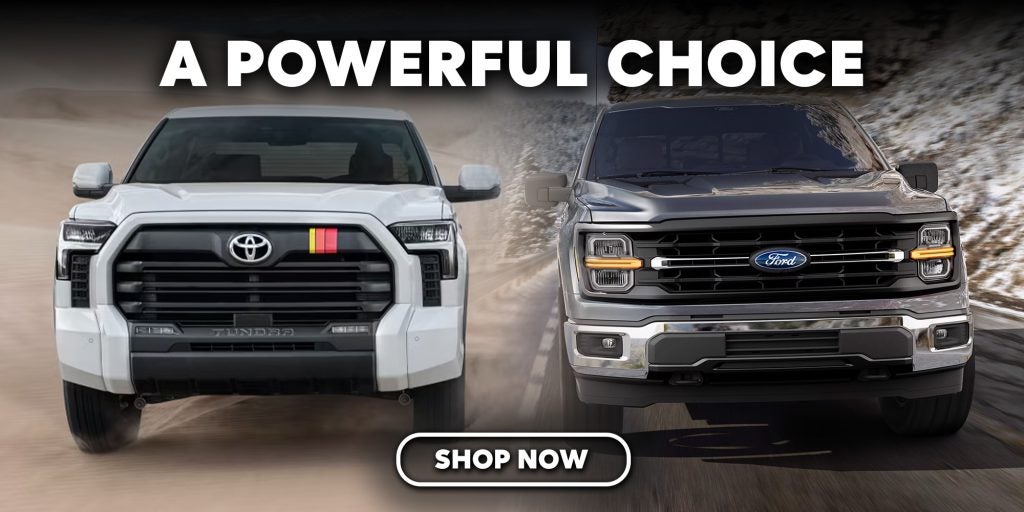
Ford F-150 vs. Toyota Tundra: Comparing Rugged Contenders In The Full-Size Truck Segment Choosing between the Ford F-150 and Toyota Tundra usually comes down to how you plan to use a full-size truck, not just which badge you prefer. In any serious look at the Ford F-150 vs. Toyota Tundra, the real differentiators are powertrain choice, towing setup, cabin usability, off-road trim strategy, and long-term ownership priorities. These two pickup truck rivals are cross-shopped because both promise strong horsepower, modern technology, and everyday versatility, but they approach the segment differently. The Ford F-150 leans into broad configuration freedom for work, family, towing, and high-performance use, while the Toyota Tundra takes a more focused path with a twin-turbo V6 platform and a simpler lineup. This Ford F-150 vs. Toyota Tundra comparison from Crossroads Ford of Wake Forest covers the categories that matter most, from performance to reliability. When you're ready to find the full-size truck for you, visit our Ford dealer in Wake Forest, NC, for a test drive. At a Glance: Ford F-150 vs. Toyota Tundra The Ford F-150 stands out because it is America’s best-selling truck and because its trim levels and mechanical choices cover more use cases than almost any other full-size truck. That breadth matters in the real world because buyers can prioritize MPG, towing, off-road hardware, luxury features, or high horsepower without leaving the nameplate. The Toyota Tundra takes a different approach, centering the lineup around a modern twin-turbo V6 architecture with trims aimed at commuting, towing, and recreation. That simpler strategy gives the Toyota Tundra a more streamlined identity, but the Ford F-150 remains easier to tailor precisely to a buyer’s budget, trailer weight, and daily routine. Best-Fit Buyer Profiles Frequent towers who need the right axle ratio, tow package, and payload match will usually find more precise fitment options in the Ford F-150 lineup. Buyers who want a specific sweet-spot trim, especially in 4x4 form, also benefit from Ford’s broader menu because it reduces the chance of paying for features they do not need. Powertrains and Performance If you're wondering which is better in the Ford F-150 vs. Toyota Tundra comparison, it starts with how it performs under the hood. The Ford F-150 has a broader and more strategically useful engine lineup. It offers a powerful range of engine options, including the 2.7L EcoBoost® V6, 3.5L EcoBoost® V6, 5.0L Ti-VCT V8, 3.5L PowerBoost® Full Hybrid V6, and the 5.2L Supercharged V8 in the Ford F-150 Raptor® R™, all paired with a 10-speed automatic transmission. That range matters because engine choice changes the truck’s character more than many buyers expect. A smaller EcoBoost® engine can make sense for lighter-duty daily driving, the 3.5L EcoBoost® is a proven towing-oriented option, the V8 appeals to buyers who prefer a traditional feel, and the hybrid adds another layer of low-end response and efficiency strategy. The Toyota Tundra is more focused, with its standard i-FORCE 3.4L twin-turbo V6 producing 358 horsepower and 406 lb.-ft. of torque, plus available i-FORCE MAX hybrid availability where applicable. That setup gives the Toyota Tundra a torque-forward personality that can feel strong in normal driving, especially when pulling away from a stop or merging with a load. In the Ford F-150 vs. Toyota Tundra matchup, the Ford F-150’s advantage is not just peak output but calibration flexibility. A truck lineup that spans efficient V6 options, a hybrid, a V8, and halo-performance variants allows buyers to match gearing, throttle feel, and intended use more accurately than a one-engine-centered strategy. Throttle response and transmission behavior are configuration-dependent in both trucks, especially once tire size, axle ratio, and trim weight change the equation. Still, the Ford F-150 offers more ways to optimize highway composure, passing power when loaded, and low-end pull, which is why it feels more adaptable across the widest range of drivers. Towing and Hauling In the Ford F-150 vs. Toyota Tundra towing capacity comparison, the Ford F-150 leads this category on both ceiling and support tools. When properly equipped, it can tow up to 13,500 lbs., while the Toyota Tundra is rated up to 12,000 lbs. That gap is meaningful because trailer buyers often run out of margin faster than expected once passengers, cargo, and hitch weight are added. Those looking to optimize the Ford F-150 vs. Toyota Tundra maximum tow ratings should consider that axle ratio, cab style, bed length, drivetrain, cooling package, hitch equipment, and tire rating can change what a truck can safely handle. The best towing truck is the one with the right build sheet, not just the highest ad claim. Payload capacity is equally important, especially for travel trailers where tongue weight consumes payload before the trailer reaches its advertised maximum. The Ford F-150’s maximum payload of up to 2,440 lbs. gives it a practical advantage for buyers carrying passengers, tools, bed cargo, and trailer tongue weight at the same time. Meanwhile, the Toyota Tundra achieves up to a maximum of 1,850 lbs. of payload, significantly less than the rugged Ford F-150. Ford also offers a deeper towing-tech toolkit, including Pro Trailer Backup Assist™, Smart Hitch, Onboard Scales, trailer brake controller availability, camera support, hitch guidance, and trailer sway control. The Toyota Tundra includes advanced towing technology, but Ford’s system depth is more work-focused and reduces the learning curve for backing, loading, and hitch setup. The Ford F-150 vs. Toyota Tundra bed dimensions also matter once a truck becomes a daily tool. The Ford F-150’s work-minded features, bed access solutions, and utility-oriented design make it easier to use beyond the spec sheet, which is where many trucks either earn loyalty or create frustration. Interior, Comfort, and Tech Step inside each truck cabin to further compare the Ford F-150 vs. Toyota Tundra. The Ford F-150 has the more work-intelligent cabin, while the Toyota Tundra makes a strong case on modern presentation. Ford’s interior strategy emphasizes productivity with features such as an available Interior Work Surface, large console storage, durable materials, premium finishes, and a layout designed for comfort and connectivity during long days in the truck. For full-size truck buyers who often use the cabin as a mobile office, charging hub, and storage zone, the Ford F-150’s interior layout is ideal for those looking for practicality. USB-C ports, 12V and 120V outlets, device placement, and flat surfaces can matter as much as upholstery when the truck doubles as a tool for business and travel. When it comes to infotainment, the Ford F-150 offers a standard 12-in. touchscreen with SYNC® 4 and enhanced voice recognition, while the Toyota Tundra counters with an available 14-in. touchscreen. Each configuration has wireless Android Auto™ and wireless Apple CarPlay® compatibility to streamline all of your entertainment needs. Toyota’s larger available display is a real advantage on paper, but Ford’s tech ecosystem is more integrated into truck tasks, which gives it stronger day-to-day utility. Driver assistance is another close contest in the Ford F-150 vs. Toyota Tundra matchup. The Toyota Tundra brings standard Toyota Safety Sense™ 2.5, while the Ford F-150 offers driver assistance and safety features found in the Ford Co-Pilot360® suite, plus available Ford BlueCruise hands-free driving. Visibility and camera support also shape comfort because parking a large pickup truck is a daily event, not a rare one. Available 360-degree camera systems, trailer camera support, and parking sensors are especially valuable in urban lots and tight job sites, and Ford’s truck-centric camera and towing integration feel more purpose-built. Reliability and Durability Durability, reliability, and ownership cost are related but not identical in the Ford F-150 vs. Toyota Tundra comparison. Durability is about how the frame, body, suspension, cooling system, and brakes handle repeated load; reliability is about issue frequency and repair interruptions; cost is about parts, labor, downtime, and how quickly problems are resolved. The Toyota Tundra benefits from Toyota’s long-standing reliability reputation, and that reputation matters because many buyers use it as a proxy for lower stress ownership. Even so, modern trucks from every brand are mechanically and electronically complex, so maintenance history, recall completion, software updates, and service quality often influence ownership experience more than brand mythology alone. The Ford F-150 makes a stronger durability case for hard use because its high-strength, military-grade aluminum-alloy body and work-oriented engineering are built around payload, towing, and broad duty cycles. A truck that is configured and maintained correctly will usually age better in demanding service than one chosen mainly on reputation, and Ford’s lineup gives buyers more ways to avoid underbuying for the job. Service records also matter more than internet anecdotes when closely looking at the Ford F-150 vs. Toyota Tundra comparison. Trucks that have towed heavily should be evaluated for hitch wear, brake condition, transmission service, rear suspension sag, and cooling system health, because those signs reveal more than a generic reliability ranking. Off-Road Capability and Trims The Toyota Tundra offers credible trail hardware and is easy to understand in off-road form. Available features such as Crawl Control, Multi-Terrain Select, the TRD Off-Road Package, Bilstein® off-road shocks, BBS® forged wheels, an aluminum skid plate, and the Toyota Tundra TRD Pro trim give it legitimate recreational appeal for buyers who want factory-backed adventure equipment. The Ford F-150 responds with a wider off-road ladder that stretches from selectable drive modes and available Rock Crawl to specialized trims such as the Ford F-150 Tremor®, Ford F-150 Raptor®, and Ford F-150 Raptor R. This diverse selection allows shoppers to choose anything from a practical all-around 4x4 to a high-speed desert-oriented flagship without leaving the Ford F-150 family. Hardware differences further define the gap in the Ford F-150 vs. Toyota Tundra comparison. Ground clearance, approach and departure geometry, shock tuning, locking capability, wheel and tire packages, skid protection, and terrain management all shape trail performance more than styling cues, and Ford’s upper-end off-road ceiling is simply higher. Toyota’s Multi-Terrain Select and Crawl Control are useful low-speed aids, especially for moderate trails and controlled technical sections. Ford counters with drive modes and trail-control-style functionality where relevant, but its biggest advantage is that the off-road range scales upward much further for buyers who want serious capability from the factory. The Full-Size Finale For most buyers comparing the Ford F-150 vs. Toyota Tundra, the Ford F-150 is the better all-around choice because it solves more truck problems with fewer compromises. It offers stronger towing and payload ceilings, more powertrain flexibility, deeper trailer technology, and a cabin shaped around real work, which is why it remains the safer recommendation for shoppers who need their truck to do more than one job well. The Toyota Tundra is still an efficient option for buyers who want a torque-forward twin-turbo V6, a large available touchscreen, and Toyota’s familiar ownership image. Even so, the Ford F-150 wins the broader comparison because full-size truck value is defined by fitment, capability, and adaptability, and Ford gives buyers more ways to get all three while still keeping fuel economy choices on the table through its wider engine range. If you want to explore the Ford F-150 in person, Crossroads Ford of Wake Forest is a smart place to compare trims, towing equipment, and technology features side by side. Visit us in Wake Forest, NC, today! FAQs Is the Ford F-150 or Toyota Tundra better for towing? The Ford F-150 is usually the better towing choice because its maximum rating reaches 13,500 lbs. when properly equipped, versus up to 12,000 lbs. for the Toyota Tundra. Ford also adds more specialized towing tools, which matters as much as raw rating. Which truck has better engine options? The Ford F-150 has the stronger engine spread because it offers multiple EcoBoost® choices, a V8, a hybrid, and high-output Ford F-150 Raptor® models. The Toyota Tundra’s twin-turbo V6 is strong, but Ford gives buyers more ways to match powertrain to budget and use. Is the Toyota Tundra more reliable than the Ford F-150? The Toyota Tundra has a strong reputation, but modern truck ownership depends heavily on maintenance, recall completion, and service history. The Ford F-150 remains a smart buy when configured correctly and maintained well, especially for heavier-duty use. Which truck is better for daily driving? The Toyota Tundra’s torque-rich V6 and available large screen make it easy to like in daily use. Still, the Ford F-150 is often the better everyday truck because its trim, engine, and cabin options let buyers tune comfort, utility, and fuel priorities more precisely. Does the Ford F-150 or Toyota Tundra have better technology? The Toyota Tundra offers a larger available 14-inch touchscreen and standard Toyota Safety Sense™ 2.5, which are real strengths. The Ford F-150 still takes the edge because SYNC® 4, available BlueCruise, and truck-specific towing and work features create a more useful overall tech package. Which truck is the better value? Value depends on how closely the truck fits your needs, not just the sticker price. The Ford F-150 usually delivers better value for more buyers because its broader lineup makes it easier to avoid paying for the wrong mix of capability, comfort, and equipment. SHOP NOW